


Robert, Michael and 2,340+ customers wear the bracelet every day
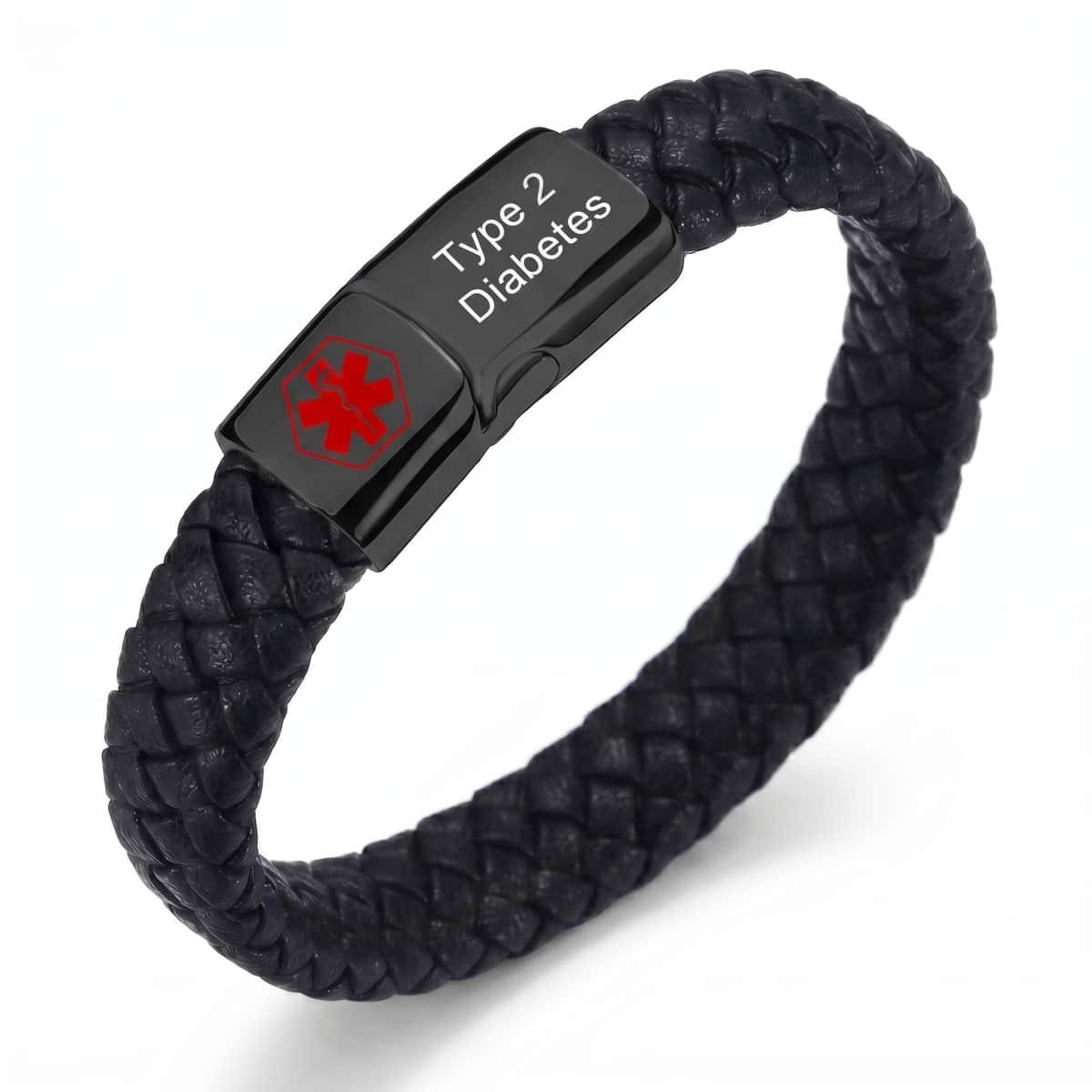
Medical ID Bracelet
Speaks for you when you can't.
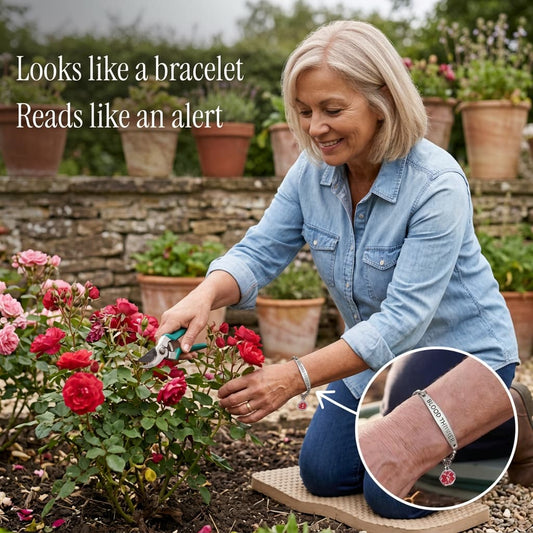
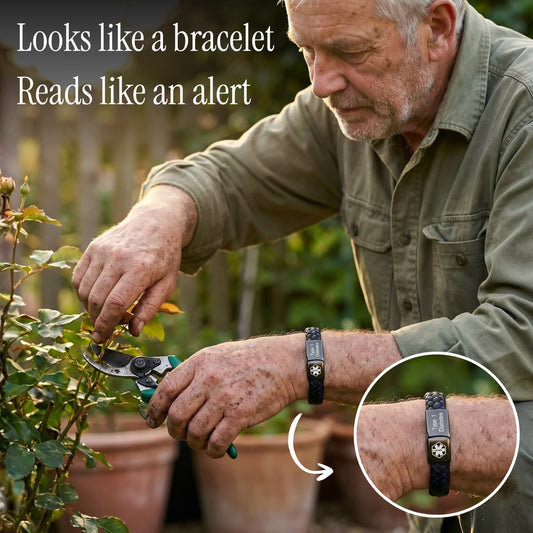
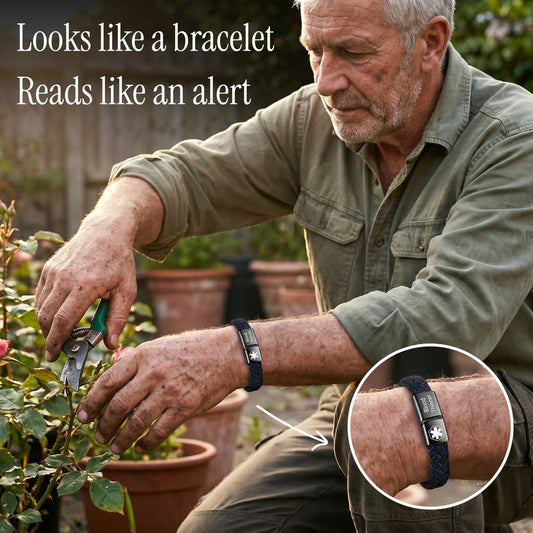
So paramedics know straight away that you're diabetic the moment they check your wrist.
Engraved medical ID bracelet — does not measure blood sugar levels.

Diabetes Bracelet
Couldn't load pickup availability


"I've been diabetic for years and always refused to wear a medical bracelet. Too clinical, too obvious. This one looks like a watch — my friends don't even know what it is. Most of the time I forget it's even on my wrist. Exactly what I wanted."
Yes. Paramedics are trained to check the wrist first whenever a patient is unconscious or unresponsive. It's a standard reflex — over 85% recommend a medical bracelet for people with diabetes.
No. This is an engraved medical ID bracelet — it tells paramedics you're diabetic, it doesn't measure blood sugar levels. No bracelet sold without a prescription can reliably measure blood sugar (MHRA).


Why Wear a Bracelet
What the paramedic sees first decides everything that follows.
For you, or for someone you love with diabetes, the first ninety seconds on the scene shape every decision that follows. The treatment given. How quickly they're moved. Which hospital they're taken to. The wrist is the first thing paramedics check.
You think you don't need one.
That's what most of our customers thought too. Until the day they were unconscious, alone, unable to speak. The bracelet isn't for every day. It's for the day you can't do anything for yourself.
Paramedics don't search through your belongings.
In an emergency, they have neither the time nor the instinct to look for a card in a wallet, bag, or pocket. The wrist, on the other hand, is checked as standard within the first few seconds. What they don't see straight away doesn't exist for them.
Without information, paramedics treat blind.
Diabetes changes every decision. The insulin given, the blood sugar to monitor, which hospital you're taken to. Visible information is the cheapest insurance you'll ever wear.
Worn By
For you, or for someone you love.
Some buy it for themselves, after a diagnosis. Others for their father, after a hypo. For a husband, a brother, a friend on the same medication. The reason is always the same. The moment when seconds count.

For you
After a recent diagnosis, a hypo, or because it's been on your mind for a while. The most thoughtful decision of the day.

For your father
Most often: a son, after his father's hypo. Worn from the day it arrives.

For your husband
For the man whose medication you probably know better than he does. Often bought in twos — one for everyday, one for travel.

After a scare
After an emergency, a severe hypo, a friend's fall. What you kept putting off — until now.

Before a trip
A holiday, a long flight, a road trip with the grandchildren. Worn discreetly. Always ready.
Quick Comparison
How the bracelet compares to the alternatives.
| Canily | Wallet Card | No Alert | |
|---|---|---|---|
| Read at a glance | ✓ | Has to be found | - |
| Checked by paramedics | ✓ | Not the reflex | - |
| Stays on your body | ✓ | Often separated | - |
| Visible if unconscious | ✓ | Can't be found | Treating blind |
| Works abroad | ✓ | Not always | Same risk |
| 30-day returns | ✓ | - | - |

Real Reviews
What our customers say, in their own words.
"Having a hypo in the street, two police officers stopped me thinking I was drunk. I could barely speak to explain. It took twenty minutes before they understood. That really scared me — I ordered the bracelet that same evening. Now it never leaves my wrist."
"I'd been on blood thinners for six months and still hadn't ordered one. I had a funny turn in a shop. The paramedic spotted the bracelet the moment they arrived. I should have bought it the day my cardiologist recommended it."
"Bought this for my dad, 71, on blood thinners. He grumbled when it arrived — too obvious, didn't need it, all that. Three weeks later he won't leave the house without it. We've ordered a second one as a spare."
"Collapsed in the middle of the street, couldn't speak. The paramedics saw straight away that I was diabetic and adjusted their treatment immediately. My doctor had told me that without identification, they could have given the wrong treatment. I don't want to think about it."
"It looks like a watch, not a hospital tag. That was my main hesitation. My colleagues don't even know what it is. Worth it for that alone."
"Diabetic for twenty years, I put this off for a long time. My daughter sent it to me after a scare. It's the first thing I put on every morning. I don't know why I waited so long."
"I've worn it for 8 months, every day, showers included. The engraving is as sharp as it was on day one. I expected it to fade — not at all."
"My husband's been on blood thinners since his stroke. His cardiologist had recommended a medical bracelet. I don't know why we waited six months. It's a no-brainer."
Questions
Questions asked, answers found.
Yes. Paramedics and emergency staff are trained to check the wrist first when assessing an unconscious or unresponsive patient. A visible medical alert is one of the fastest ways to receive the right treatment in those first few minutes.
No. A sensor or pump manages your treatment — but it doesn't tell paramedics your condition in an emergency. A paramedic who sees a pump knows you're diabetic, but not your type, related medications, or how to respond. And if you're not wearing your pump when the emergency happens, they know nothing at all. The bracelet does one thing, but it's decisive: it tells paramedics who you are medically, from the first second, even if you can't speak.
Yes. Even the best-managed diabetics can have an unpredictable severe hypo — during unusual exercise, a delayed meal, or stress. And in a car accident or a collapse in the street, paramedics will never know you're diabetic without a bracelet. It's not about how well you manage it — it's about what happens when you can't manage it yourself.
A few reasons come up often. The bracelet wears over time. Some misplace it while travelling or at the gym. Others like having one for everyday and one for nights out. Some buy a second for a loved one on the same medication.
A braided black leather bracelet with blue thread, fastened with a metal magnetic clasp. The clasp displays the medical condition and the universal medical alert symbol.
One size, fits most wrists. If it's not right for you, we'll arrange an exchange or a full refund within 30 days.
Brief contact with water is fine. Dry it after a shower or if it's caught in the rain. Avoid prolonged submersion in a pool or the sea.
Phones lock, run out of battery, or get separated from you in a fall. Medical details on a phone are useful, but only if the device is switched on, present, and someone thinks to check it. The wrist is checked first, every time. The two work best together.
Yes, this is actually one of the situations where it's most useful. In a severe hypo or loss of consciousness, paramedics immediately see that you're diabetic and can adjust their care accordingly.
Yes. The bracelet is recognised internationally — the medical symbol (star of life) is universal and understood by paramedics in every country. The engraving is in English, a language understood by healthcare professionals worldwide. Whether you're in Europe, the US, or elsewhere, first responders will immediately understand your bracelet. No translation needed.
Tracked delivery is free on all orders. Your bracelet arrives within 6 to 10 working days.
30 days from delivery, no questions asked. Get in touch and we'll guide you through the return. Refunds are processed within 3 working days of receiving the bracelet back. Return postage is free of charge.
Wear it before you need it.
Most of our customers tell us they wish they'd ordered sooner. None have ever said they ordered too soon.
Order yours from £2230-day returns · Free delivery on all orders
Our Collection
-
Blood Thinner Bracelet
Vendor:CanilyRegular price £24.00Regular price £24.00 Sale priceUnit price per -
Diabetes Bracelet
Vendor:CanilyRegular price £22.00Regular price £22.00 Sale priceUnit price per -
Blood Thinner Bracelet
Vendor:CanilyRegular price £22.00Regular price £22.00 Sale priceUnit price per



- Choosing a selection results in a full page refresh.
- Opens in a new window.